A recent staff exchange supported by the Lasers4EU project has strengthened collaboration between the Centre for Ultrafast Science and Biomedical Optics (CUSBO) at Politecnico di Milano and Institute of Molecular Sciences of Orsay (ISMO), advancing expertise in single-molecule and super-resolution microscopy.
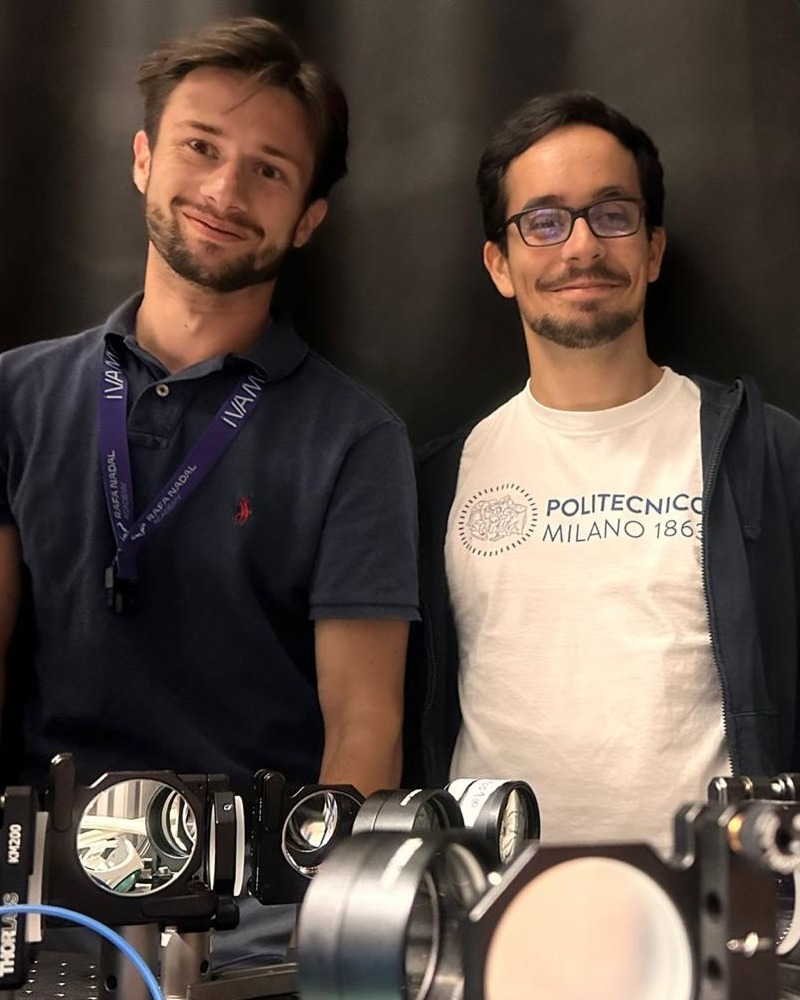
In July and November 2025, Paolo Maran, PhD Student, and Andrea Bassi, Associate Professor at CUSBO, spent two weeks at ISMO in the Paris region to be trained in single-molecule and super-resolution microscopy.
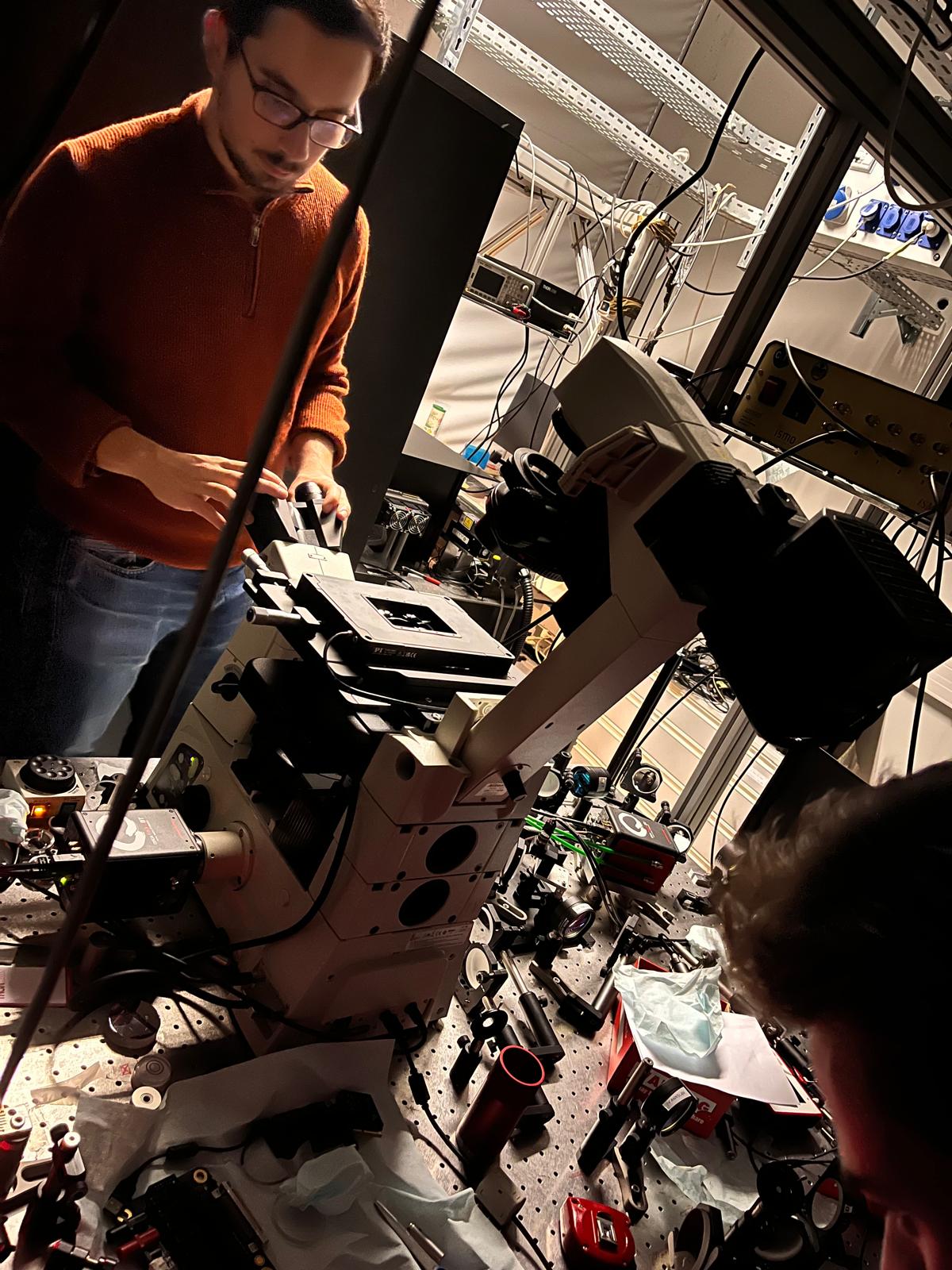
During the staff exchange, participating staff received hands-on training on ISMO’s single-molecule localization microscopy platforms. The programme covered key stages of advanced nanoscopy experiments, including sample preparation, optical alignment, system calibration, and validation protocols. This practical experience was complemented by joint experiments that enabled CUSBO’s photonic devices to be interfaced directly with the host instruments, allowing an initial assessment of the devices’ performance for single-molecule imaging. Key parameters such as phase stability, illumination uniformity, and their potential benefits for high-precision localization were evaluated.
“The exchange confirmed that integrated photonic devices can effectively upgrade conventional microscopy setups into super-resolution instruments. At the same time, it played a key role in establishing shared experimental protocols and defining follow-up activities for the development of integrated optical systems for nanoscopy,” says Andrea Bassi, who participated in the exchange.
The know-how gained during the exchange will be useful at CUSBO, which aims to develop new superresolution systems in its facility. Trained personnel will implement improved calibration and acquisition procedures on local nanoscopy instruments, drawing on the experience acquired in single-molecule detection and optical alignment.
In addition, the patterned-light validation protocols discussed at ISMO will be adopted at CUSBO to enhance experimental reproducibility and expand the institute’s capacity to host external researchers working in super-resolution imaging. Overall, the exchange highlights the impact of Lasers4EU in fostering knowledge transfer, collaboration, and innovation across European photonics and imaging communities.